
Choose live rosin if you want solventless extraction and the closest flavor match to the living plant, even at a higher price. Choose live resin if you want higher labeled THC, better value per gram, and easier availability in vape carts. Both start from flash-frozen cannabis, so the real decision isn’t about quality. It’s about whether flavor purity or potency-per-dollar matters more to you.
TL;DR:
- Live resin generally offers higher THC percentages and better availability in vape carts, making it the practical choice for potency and cost-efficiency.
- Live rosin preserves more delicate terpenes, resulting in a flavor profile that closely resembles the fresh plant, especially after cold curing.
- Extraction methods significantly affect flavor: solventless rosin usually retains more bright, light terpenes, while hydrocarbon resin extraction tends to produce more predictable cartridge formulations.
- Price differences stem from extraction efficiency: solvent-based live resin yields more THC per pound, whereas live rosin is more labor-intensive and yields less, driving up its cost.
- Hardware compatibility and storage practices critically influence the vaping experience, with thicker rosin oils requiring specialized cartridges and careful storage to prevent degradation.
Table of Contents
- Live Resin vs Rosin: A Quick Side-by-Side Look
- What Does “Live” Actually Mean, and How Is Each One Made?
- Why Does Rosin Taste Different From Resin?
- Why Do Potency and Price Differ So Much?
- How Do You Avoid Clogged Carts and Burnt Hits?
- How Should You Decide Between Live Resin and Live Rosin?
- FRYD Extract’s Take on Extraction and Flavor
- Does Extraction Method Affect the Environment?
- Is One Category Growing Faster Than the Other?
- Our Take: Stop Treating This as a Quality Argument
- Try Flavor-Forward FRYD Carts Built for Every Priority
- Sources
- FAQ
Live Resin vs Rosin: A Quick Side-by-Side Look
The core trade-off comes down to process versus outcome. Live rosin uses ice, water, and pressure with zero solvents, which protects terpenes but limits how much a producer can squeeze out of each harvest. Live resin uses hydrocarbon solvents in a closed loop, which scales up production and pushes THC numbers higher, often at some cost to the raw, plant-true flavor rosin is known for.
Here’s how the two stack up across the factors that actually affect your purchase:
- Extraction method: Live resin uses butane or propane in a closed-loop system; live rosin uses only ice water, heat, and mechanical pressure.
- Solvent use: Live resin requires post-extraction purging to meet legal residual-solvent limits; live rosin is solventless from start to finish.
- Typical THC range: Live resin commonly lists higher on labels; live rosin runs slightly lower but often carries a fuller terpene load.
- Flavor fidelity: Live rosin tends to taste closer to the fresh flower; live resin’s flavor is strong but shaped by the solvent process.
- Common textures: Live resin appears as sauce, sugar, or badder; live rosin appears as a creamy, often lighter colored paste.
- Price range: Live rosin usually costs more per gram; live resin generally offers better value at scale.
- Vape cart behavior: Live resin formulates more predictably for cartridges; rosin oils can run thicker and need hardware tuned to handle them.
Format flips the priority for a lot of buyers. Someone who dabs concentrate straight off a nail cares most about terpene fidelity, so rosin wins. Someone buying a disposable cart for daily, discreet use often cares more about consistency and hardware compatibility, where a well-made live resin cart has the edge.
What Does “Live” Actually Mean, and How Is Each One Made?
“Live” refers to the starting material, not the extraction method. Growers harvest the plant and flash-freeze it within hours, sometimes minutes, instead of letting it dry and cure for weeks. That speed matters because a huge share of cannabis terpenes are volatile compounds that evaporate during standard drying. Freezing the plant fast locks those terpenes in place before oxygen and heat can break them down, which is why both live resin and live rosin taste noticeably different from concentrates made with dried, cured flower.
From that shared starting point, the two paths diverge completely.
- Live resin extraction: Frozen plant material goes into a closed-loop system where hydrocarbon solvents like butane or propane strip cannabinoids and terpenes from the plant matter.
- Solvent recovery: The system recovers most of the solvent for reuse, then the raw extract moves to a vacuum oven or purge chamber.
- Purging: Technicians hold the extract at controlled temperature and vacuum pressure until residual solvent drops below the legal threshold for that market.
- Live rosin’s ice-water wash: Frozen plant material gets agitated in ice water, separating trichome heads into what’s known as bubble hash.
- Freeze-drying: The wet hash is freeze-dried to pull out moisture without melting the delicate trichomes.
- Pressing: Dried hash goes into a rosin press, where controlled heat and pressure squeeze out the oil, leaving plant fiber behind.
- Cold cure: Many rosin producers let the pressed oil rest at low temperature for days or weeks, which smooths texture and rounds out flavor.
Yield and labor diverge just as sharply. Live resin scales efficiently since solvent extraction pulls a high percentage of available oil from the material, while ice-water hash production yields far less per pound and takes considerably more hands-on time. Starting-material quality drives outcomes either way. Sloppy freezing or old plant material shows up in the final product no matter which extraction path a producer chooses.
Pro Tip: If a product’s label doesn’t say when the plant was frozen relative to harvest, ask your budtender. A same-day freeze almost always beats a “flash-frozen” claim with no timeline attached.
Why Does Rosin Taste Different From Resin?
Terpenes are fragile, and the extraction method determines which ones survive. Monoterpenes like limonene and pinene evaporate at relatively low temperatures, so any process involving heat, pressure, or solvent recovery risks stripping some of them away before the final product is finished. Rosin’s cold, mechanical process tends to preserve more of these lighter, brighter terpenes, which is why connoisseurs describe it as tasting “closer to the plant.”
Texture tells part of the flavor story too:
- Sauce: A liquid terpene layer sitting over cannabinoid crystals, common in high-end live resin.
- Sugar and badder: Whipped, drier textures that trade some terpene punch for easier handling.
- Creamy rosin: A smooth, often lighter-colored paste that holds terpenes close to their natural ratio.
The subjective effect ties back to more than the THC number on the label. Full-spectrum products carry minor cannabinoids like CBG and CBN alongside a broader terpene profile, and researchers and industry experts widely agree that this combination shapes how “strong” or “clear” an experience feels more than THC percentage alone. This is sometimes called the entourage effect, and it explains why two products with nearly identical THC numbers can feel completely different to consume.
Cold curing pushes this even further. Producers who specialize in solventless hash work often rest their rosin for days after pressing, a step that measurably improves terpene expression and smooths out harsh notes. That patience is part of why cold-cured rosin commands premium pricing at dispensaries.
Why Do Potency and Price Differ So Much?
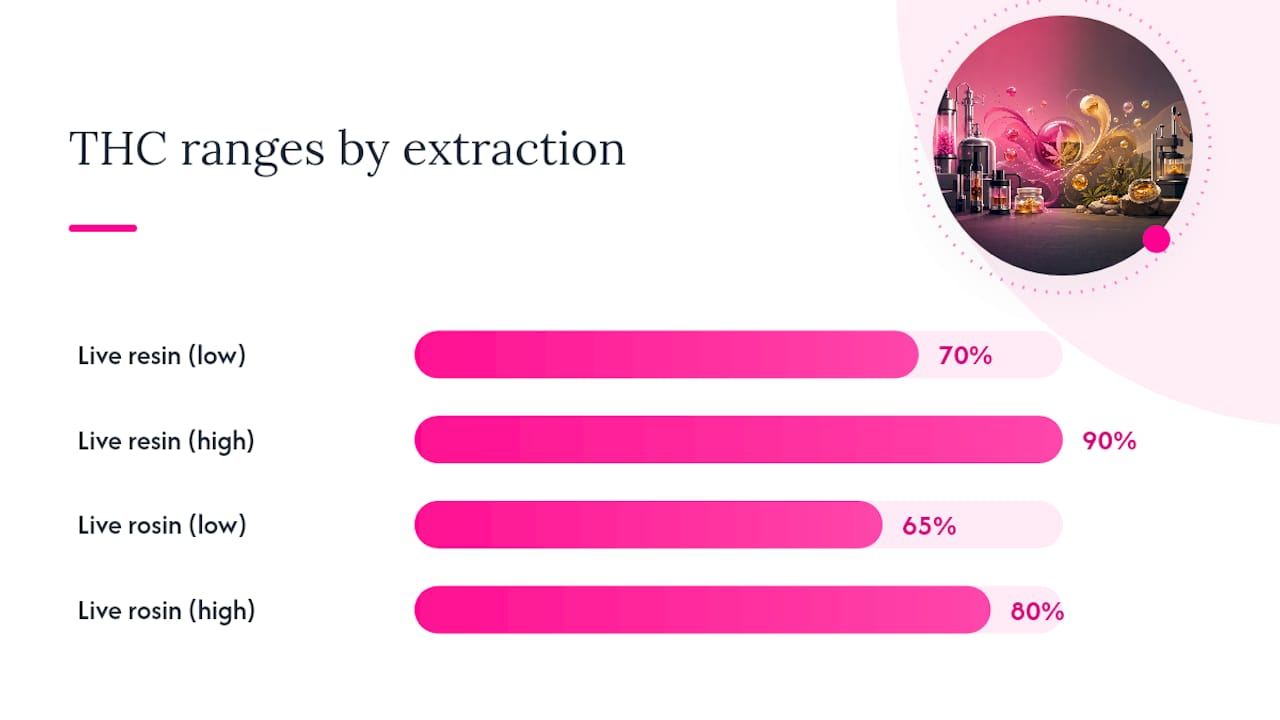
Live resin usually lists higher THC percentages than live rosin, and the reason comes down to extraction chemistry rather than plant quality. Hydrocarbon solvents are efficient at pulling cannabinoids out of plant material, often producing extracts in the 70 to 90 percent THC range. Live rosin, limited to mechanical pressure, typically lands in the 65 to 80 percent range, since full-melt hash production simply can’t match solvent extraction’s cannabinoid recovery rate.
Yield economics explain most of the price gap. A pound of quality flash-frozen material might return significantly less finished rosin than the same pound would yield in resin, since ice-water hash washing is inherently less efficient than solvent-based extraction. That shortfall gets passed straight to the shelf price, with rosin often running significantly higher per gram in the same market.
When you’re actually comparing products at a dispensary counter, a few habits help:
- Check the certificate of analysis (COA) for total THC, not just what’s printed on the front label.
- Calculate cost per milligram of THC if potency and value matter more to you than flavor nuance.
- Compare terpene percentage on the COA if flavor fidelity is your priority. A higher terpene percentage often correlates with a more vivid flavor experience.
- Watch local menu pricing, since rosin’s premium shrinks or disappears entirely in some markets depending on regional supply and grower specialization.
Neither pricing structure is a scam. You’re paying for chemistry and labor in different proportions depending on which one you choose.
How Do You Avoid Clogged Carts and Burnt Hits?
Rosin’s natural viscosity is the biggest practical headache for cart users. Because it contains no solvent, rosin oil tends to run thicker than solvent-based extracts, and manufacturers often need specific hardware or formulation adjustments to keep it from clogging cartridge wicks. Live resin, by contrast, generally formulates more predictably for standard cartridge systems, which is part of why it dominates the disposable and pre-filled cart market.
Hardware choice matters as much as the oil itself. A cartridge with a ceramic heating element distributes heat more evenly than a metal coil, which protects delicate terpenes from scorching. Running a battery at lower voltage settings, typically in the 3.0 to 3.3 volt range for most 510-thread batteries, also helps prevent the burnt taste that ruins an otherwise great extract.
A few habits protect both flavor and hardware:
- Start on the lowest voltage setting and only increase it if the draw feels weak.
- Store carts upright in a cool, dark spot to prevent oil pooling and light degradation.
- Avoid temperature swings, since repeated heating and cooling accelerates terpene loss and can separate oil components.
- Keep jarred concentrate refrigerated if you’re not using it within a few weeks, and always reseal tightly to limit oxidation.
Pro Tip: If a rosin cart tastes flat after a few weeks, check where you’ve been storing it before blaming the product. Heat exposure kills flavor faster than time does.
How Should You Decide Between Live Resin and Live Rosin?
Start with what you’re optimizing for, because trying to have it all usually means compromising on something. Run through this checklist before you buy:
- Set a budget range. If cost per gram matters more than nuance, lean toward live resin.
- Decide your format. Dabbing rewards rosin’s texture and flavor; cart use rewards resin’s formulation consistency.
- Weigh solvent sensitivity. If you want a solvent-free product regardless of taste, rosin is the only category that qualifies.
- Identify your desired effect. If you want the fullest possible terpene and minor-cannabinoid profile, prioritize rosin; if you want the highest THC number available, prioritize resin.
- Check your hardware. Confirm your cartridge or rig can handle the oil’s viscosity before buying in bulk.
Three shopper types cover most buyers:
- The flavor chaser wants terpene fidelity above all else and doesn’t mind paying more. Live rosin, especially a cold-cured batch, is the starting point.
- The potency and value seeker wants strong effects without overspending. Live resin delivers better THC-per-dollar economics and wider availability.
- The solvent-free purist wants zero hydrocarbon involvement no matter the format. Live rosin is the only category that fits.
When you’re at the counter, ask your budtender for the COA and check three numbers: total THC, terpene percentage, and residual solvent status (should read “none detected” or “pass” for live resin). Those three data points tell you more than any shelf label ever will.
FRYD Extract’s Take on Extraction and Flavor
FRYD Extract builds its entire vape cart line around a flash-freeze extraction method designed to lock in terpenes and cannabinoids before they degrade. That focus lands FRYD squarely in the live resin category, which means the priority is potency and flavor together, not one at the expense of the other.
Preserving terpenes at the source is what separates a forgettable cart from one people reorder. Our extraction approach starts with the same flash-frozen plant material used in premium concentrate production, then carries that flavor through into a format built for daily, discreet use.
For the flavor chaser profile described above, FRYD’s dessert-inspired Donuts line and bold flavor names like Blueberry and Watermelon give a resin-based alternative to rosin’s raw plant taste, just formulated for cart convenience instead of a dab rig. For the potency and value seeker, FRYD’s wide strain range across indica, sativa, and hybrid options means you can match effect to occasion without hunting across multiple brands. Readers weighing solvent-free purity should know that FRYD’s products, like nearly all cart-based concentrates, fall on the live resin side of the comparison, purged to meet standard testing thresholds.
Does Extraction Method Affect the Environment?
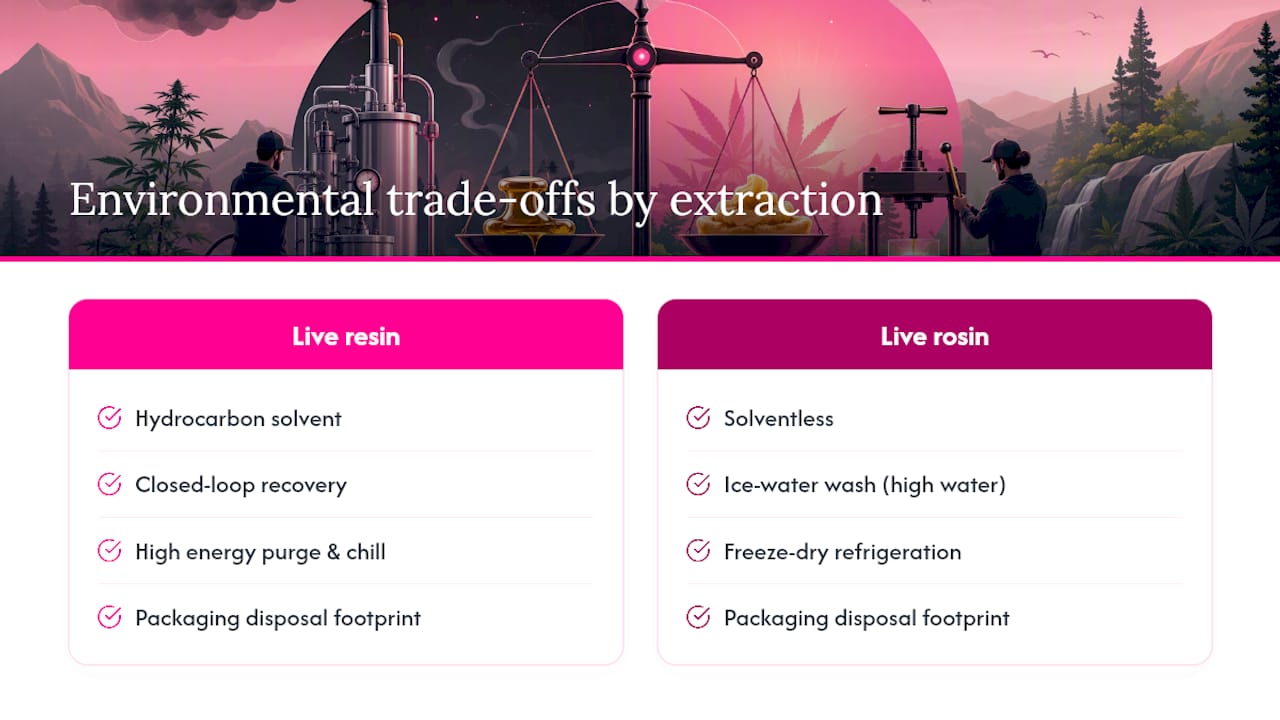
Solvent-based and solventless extraction carry different environmental footprints, and neither one is free of trade-offs. Hydrocarbon extraction for live resin requires closed-loop equipment designed to capture and reuse butane or propane, which limits atmospheric release when the system is properly maintained and operated by a licensed facility. That equipment also requires energy for vacuum purging and temperature control, a step that runs for hours per batch.
Live rosin skips solvents entirely, which removes the recovery and purging energy load, but the ice-water wash process uses significant water, and freeze-drying requires sustained refrigeration. Neither process is inherently “greener” once you account for the full production cycle, from cultivation through packaging.
Packaging and distribution add another layer regulators and producers are only beginning to address seriously. Vape cartridges involve metal and plastic components that carry their own disposal footprint, regardless of whether the oil inside is resin or rosin. Buyers who care about environmental impact should look for producers who disclose solvent recovery rates and water usage, though this kind of transparency remains inconsistent across the concentrate market. It’s a factor worth asking about, even if hard answers are still rare on product labels.
Is One Category Growing Faster Than the Other?
Live resin dominates cart shelves in most legal markets because it scales efficiently and formulates well for the disposable and pre-filled pen category that now drives a large share of concentrate sales. Its higher yield per pound keeps production costs manageable even as demand grows, which is a big part of why you’ll find far more live resin cart options than rosin cart options at most dispensaries.
Live rosin’s growth story looks different. It has built a smaller but fiercely loyal following among connoisseurs willing to pay a premium for solventless, full-melt quality, and that segment keeps expanding as more consumers become label-literate and start reading COAs before buying. Rosin’s association with craft, small-batch production also gives it cultural cachet that shows up in cannabis cup competitions and boutique dispensary marketing.
Both trends are pushing producers toward better transparency. As more buyers compare lab reports side by side, extraction method has become a genuine purchase driver rather than a footnote, and that shift shows no sign of reversing as the concentrate market matures.
Our Take: Stop Treating This as a Quality Argument
The biggest mistake in this comparison is treating live resin and live rosin like a hierarchy, with rosin sitting on top because it’s solventless and pricier. That framing ignores how differently people actually consume concentrates. A flavor purist dabbing off a rig and a busy professional who wants a discreet cart after work aren’t shopping for the same thing, even if they’re technically both buying “live” cannabis extract.
What the research actually supports is a format-first decision, not a purity-first one. If your hardware and habits point toward cart use, live resin’s formulation consistency matters more than a marginal terpene advantage you may not even notice through a cartridge. If you’re dabbing and chasing the closest possible flavor to fresh flower, rosin earns its premium.
Skip the “which one gets you higher” debate entirely. Terpene profile, minor cannabinoids, and your own tolerance do more work than the extraction method ever will.
— fryd
Try Flavor-Forward FRYD Carts Built for Every Priority
Frydcarts gives you the potency and value side of this comparison without asking you to sacrifice flavor, since every cart starts from the same flash-frozen extraction focus behind FRYD’s whole product line.
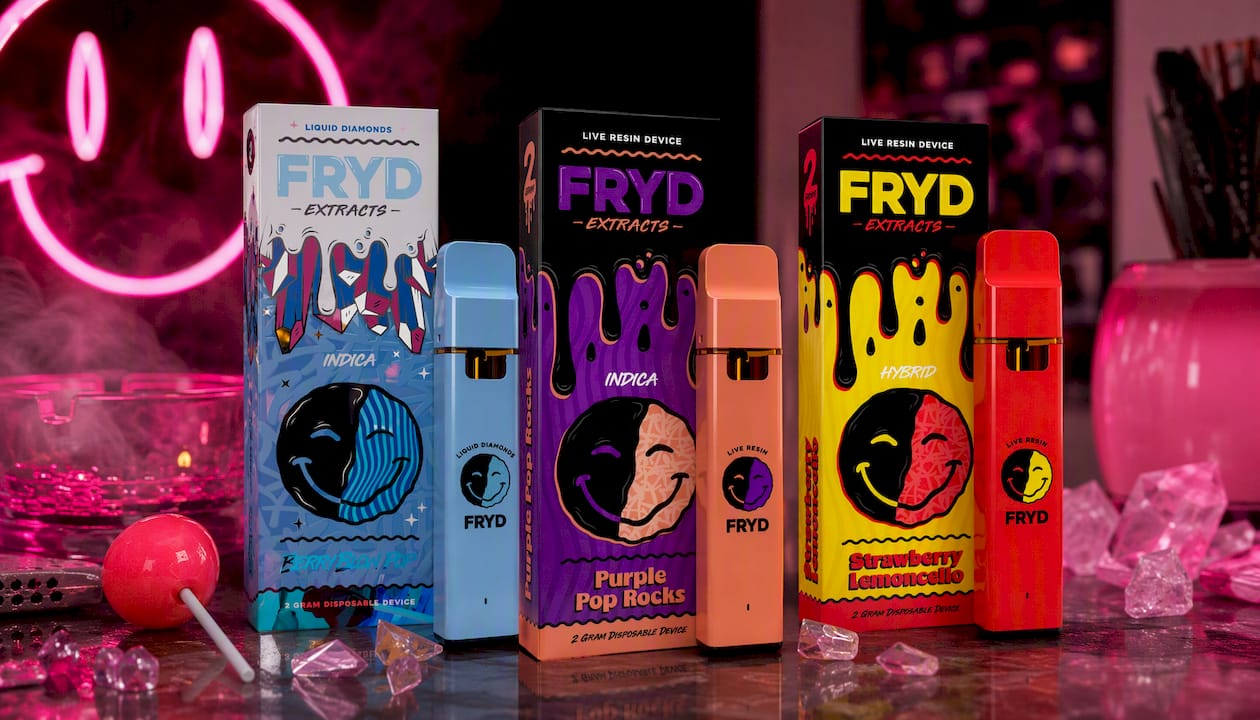
If you fit the flavor chaser profile, start with Berry Blow Pop Fryd Carts for a bold, fruit-forward terpene profile that holds up through a full cartridge. Dessert lovers who want something closer to a treat than a traditional strain should check out Purple Pop Rocks Fryd Carts, built for the sweeter, candy-leaning palate. If bright, citrus-forward flavor is what pulls you toward rosin’s reputation, Strawberry Lemoncello Fryd Carts delivers that same lively terpene character in a resin-based cart.
Buying in volume for personal stock or resale? The Fryd Carts Bulk Sale options run $500 to $5,000 per order, and the Donuts by Fryd Bulk Sale line runs $750 to $5,000 for dessert-inspired flavors at scale. Browse the full flavor lineup or explore Fryd 3G with Gummies if you want a combo option alongside your cart. Ready to pick your flavor? Head to the product pages above and place your order directly.
Sources
- Rosin vs. Live Resin — Vaping360
- Live rosin vs. live resin — Mr. Rosin Guides
- Live Resin vs Live Rosin — ThisIsWhyImHigh
- Live Resin vs Rosin Vape Carts — Eden Goods
FAQ
Does Live Resin Get You Higher Than Live Rosin?
Neither category is universally stronger. Effects depend more on terpene profile, minor cannabinoids, and personal tolerance than the THC number alone, even though live resin often lists a higher percentage on the label.
Why Do People Prefer Live Resin Over Live Rosin?
Live resin tends to cost less per gram, offers wider availability in cart form, and often lists higher THC percentages, making it the practical choice for everyday potency and value. Live rosin still wins on raw terpene fidelity for buyers willing to pay more.
Is Live Rosin the Strongest Concentrate Available?
Live rosin isn’t automatically the strongest by THC percentage. Full-melt rosin typically runs 65 to 80 percent THC compared to live resin’s 70 to 90 percent range, but its fuller terpene profile can make effects feel more pronounced to some consumers.
Does Live Rosin Get You Really High?
Live rosin delivers strong effects, largely because its solventless process preserves a broader range of terpenes and minor cannabinoids alongside THC. That combination shapes the intensity of the experience as much as the raw potency number does.
What Live Resin Products Does Frydcarts Offer?
Frydcarts sells live resin vape carts and disposables across indica, sativa, and hybrid strains, including flavor-forward options like Berry Blow Pop and dessert-inspired lines. Current prices and flavor availability can be found on the client’s website product pages.
